We’re delighted to reveal the shortlisted artists for the 2026 Photo London x Nikon Emerging Photographer Award.
Launched in 2015, the Emerging Photographer Award, presented in partnership with Nikon, was set up to nurture and enable the career development of emerging photographic artists, placing their work within the public programme of one of the world’s most celebrated fairs championing the photographic medium. The Award champions new lens-based artists by offering transformative opportunities through Photo London’s global reach and the generous support of Nikon.
“At Nikon, our mission has always been to empower photographers to capture and share the world’s most powerful stories. Over the past seven years of supporting The Emerging Photographer of the Year Award, we’ve had the privilege of championing many rising artists whose vision, curiosity, and craft transcend boundaries. We are proud to nurture their journeys, enabling them to craft images that both inspire and shape the ever-evolving landscape of photography.“
— Lucy Brice, Head of Marketing – Nikon Northern Europe
The winner will be announced at a special reception at the Nikon Gallery during Photo London on Thursday 14th May at 16:00.
2026 Shortlisted Artists
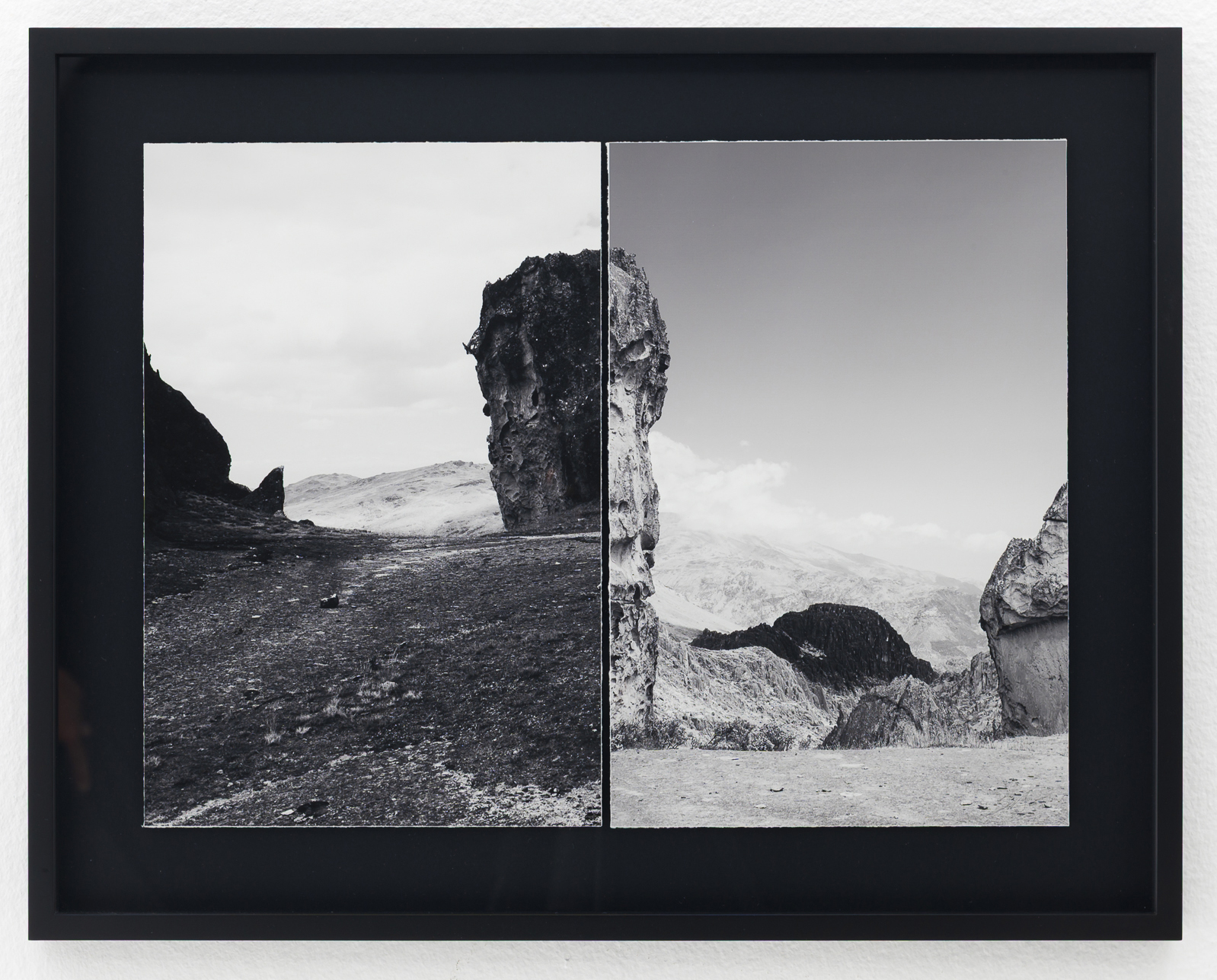
Sebastián González | Carlos Caamaño (Lima, Peru – London, UK)
© The Artist / courtesy Carlos Caamaño Proyecto Fotográfico
Artist Biography:
Sebastián González comes from a family of photographers and was surrounded from an early age by cameras, lights, and image-making processes. Although he initially pursued studies in the sciences, he later returned to photography, first as an assistant and then as a student at Centro de la Imagen, where he also taught. Since his first solo exhibition, Desgaste (Wear) in 2015, his practice has consistently revolved around the concept of wear. He approaches it not only as a physical process, but as a broader framework through which to examine memory, time, information, and symbolic structures.
His work questions ideas of permanence, revealing how gradual and often imperceptible transformations shape identity and perception over time. Working primarily with digital photography, González has sought to challenge the distance inherent in the medium by incorporating manual interventions into his prints. Through processes such as sanding, scraping, and the use of a 3D printing pen, he introduces gestures of erosion and reconstruction directly onto the image. These operations extend his exploration of wear, opening a visual field connected to landscape, material decay, and the fragmentation of information, where loss becomes a generative force within the image.
About the Project:
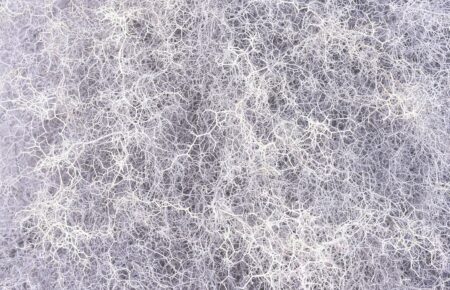
Stone has historically symbolized permanence—an unquestionable solidity, a material resistant to time. In contrast, photography—especially in its digital dimension—has cultivated a parallel myth: that of the everlasting image, the definitive capture, the promise of visual eternity. This exhibition is built precisely from the friction between these two promises of durability, to show how both erode over time, wear down, and transform. Sebastián González begins from a fascination with the stony. His photographic series focused on recording rock formations in the Andean highlands do not idealize their monumentality; instead, they observe them as vulnerable bodies, cracked by time and the elements. But he does not stop at documentation. He tears, sands, and intervenes in the photographs: he does not merely represent wear—he performs it on the image itself. Thus photography ceases to be an intangible document and becomes fragile matter, an eroded surface. In these series, the lithic landscape appears as a mirror of a broader process: everything that seems permanent is in fact subject to change. From this perspective, wear is not decay but a condition of what is alive and real. The images come undone as the world does: slowly, almost imperceptibly, but with irreversible effects. In Sebastián’s hands, photography does not seek to preserve the permanence of things, but to give form to their transformation. The images are not only traces of wear; they also enact and undergo wear. Each medium reveals itself as a sensitive body, subjected to processes of deterioration and reconfiguration. In this material vulnerability, photography approaches memory: both record, but also forget; both retain something only insofar as they let the rest go.
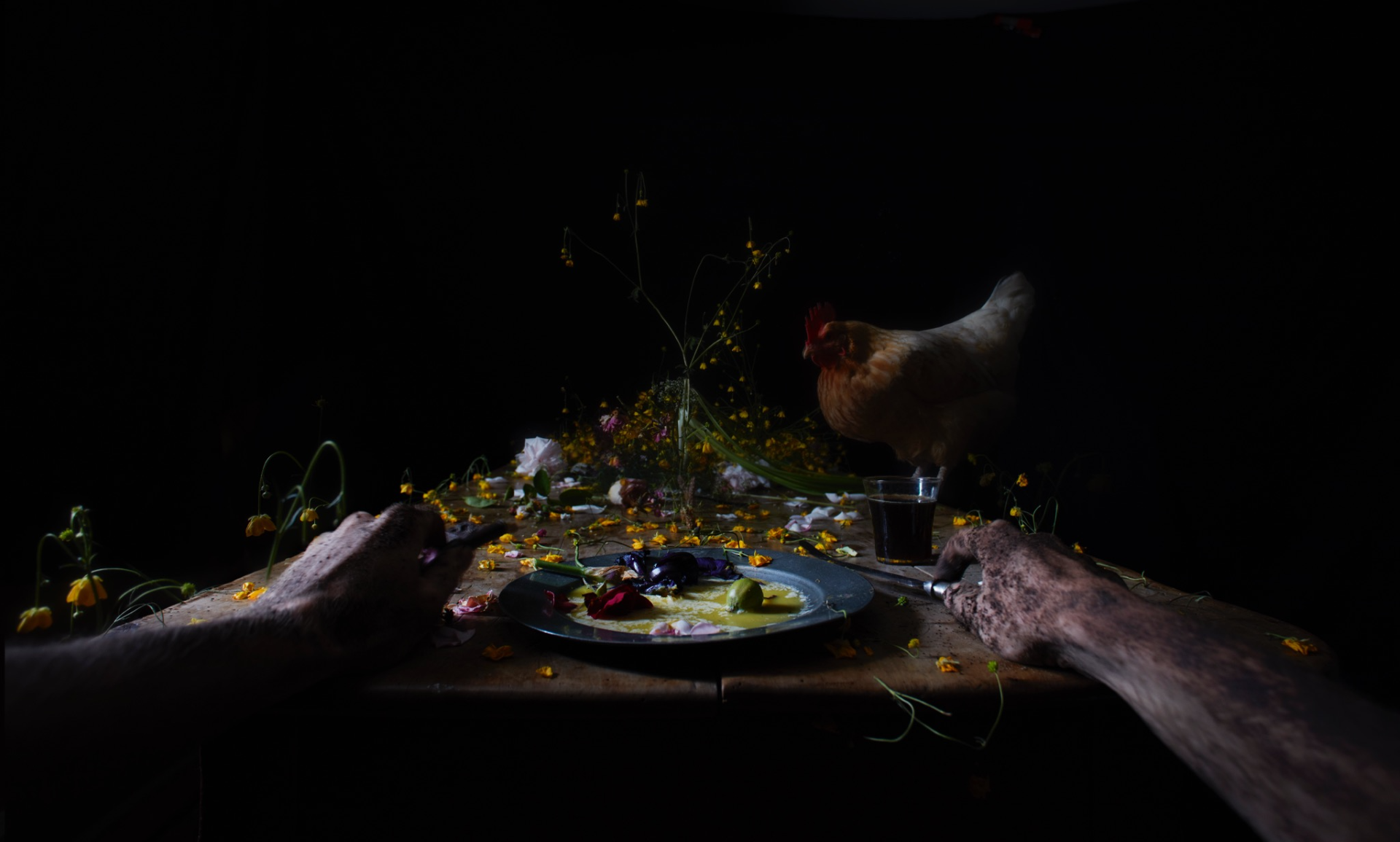
Edward Rollitt | Victoria Law Projects (London, UK)
© The Artist / courtesy Victoria Law Projects
Artist Biography:
Edward Rollitt is a British interdisciplinary artist whose practice moves across sculpture, installation, film, and photography to explore the psychology of space and the role of objects in shaping identity, memory, and social structures. Working with antique furniture, decayed textiles, soil, and the accumulated materials of domestic life, he builds environments that function as portraits: figures rendered not through likeness but through the things that surrounded them, each room absorbing and giving back the emotional residue of an imagined life. For Rollitt, the camera is not a recording device but a means of translation – each photograph tasked with distilling a three-dimensional constructed world into a single image that carries its full emotional weight. Rollitt holds an MA in Sculpture from the Royal College of Art (2023).
His first institutional exhibition, Kunstkammer, curated by Robert O’Byrne, was presented at Lismore Castle Arts alongside work by Sarah Lucas, Nicole Wermers, and Conrad Shawcross RA. Recent solo exhibitions include Where We Once Played (The Bomb Factory Foundation, Marylebone, 2025) and To Dwell in Dust (New Art Projects, London, 2024). He has been shortlisted for the National Portrait Gallery’s Taylor Wessing Prize, was a finalist for the UK New Artist of the Year Award at the Saatchi Gallery (2023) and was longlisted for the Aesthetica Art Prize (2024).
About the Project:
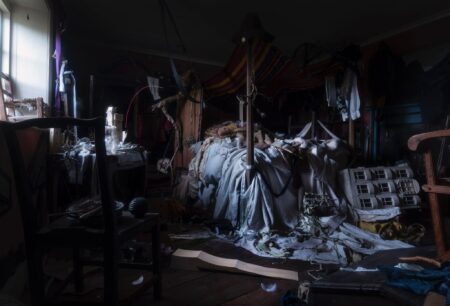
Edward Rollitt works at the intersection of sculpture and photography, assembling installations from antique furniture, decayed textiles, soil, and accumulated domestic possessions. Each work begins from a method-acted character study: a fictional figure whose world is built from objects.
Steffi Reimers | Contour Gallery (Rotterdam, The Netherlands)
© The Artist / courtesy Contour Gallery
Artist Biography:
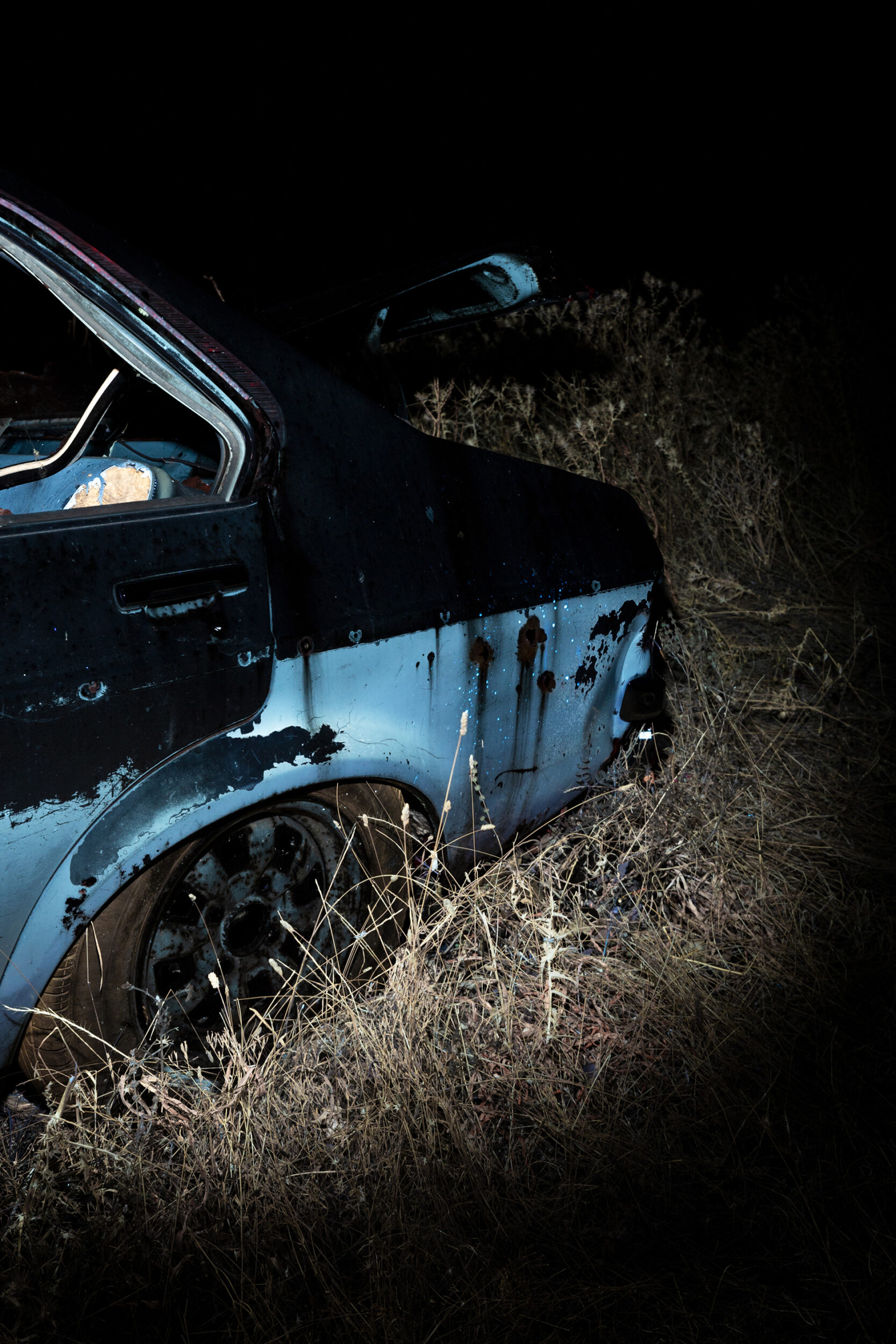
Steffi Reimers (NL, 1995) is a Dutch photographer whose work explores themes of transience, history, and loss — narratives that often remain hidden from view. Through long-term projects, she is establishing herself as one of the new voices in contemporary Dutch photography. About the work: What memory does a landscape hold when it witnesses a crime? In Guilty Grounds, Steffi Reimers investigates the landscapes of Calabria, Southern Italy, revealing them as silent witnesses to the unsettling crimes and pervasive influence of the ‘Ndrangheta. Reimers’ work engages not only with landscape but also with forensic traces, employing specialized lighting to reveal subtle marks, textures, and traces left behind, echoes of human violence that the eye might otherwise miss. Through this forensic approach, the photographs capture hidden details: scars on the earth, remnants of past activities, and the silent testimony of spaces that have witnessed crimes.
About the Project:
What memory does a landscape hold when it witnesses a crime? In Guilty Grounds, Steffi Reimers investigates the landscapes of Calabria, Southern Italy, revealing them as silent witnesses to the unsettling crimes and pervasive influence of the ‘Ndrangheta. Reimers’ work engages not only with landscape but also with forensic traces, employing specialized lighting to reveal subtle marks, textures, and traces left behind, echoes of human violence that the eye might otherwise miss. Through this forensic approach, the photographs capture hidden details: scars on the earth, remnants of past activities, and the silent testimony of spaces that have witnessed crimes.
Sal Taylor Kydd | Alta Vista Arts (Los Angeles, USA)
© The Artist / courtesy Alta Vista Arts
Artist Biography:
Sal Taylor Kydd is a British photographic artist and poet whose work interweaves photography, poetry, and alternative processes to explore themes of memory, belonging, and the passage of time. Her fine art photographs have been exhibited across the U.S. and internationally, with notable exhibitions, Los Angeles, Paris, New York, Milan and London. Taylor Kydd is the author of several artist books that combine her poetry with her photography, and in 2024, she was named a finalist in the Critical Mass photography competition, a recognition of her ongoing contributions to contemporary photography. Originally from the UK, she holds a BA in Modern Languages from Manchester University and an MFA in Photography from Maine Media College. She now lives and works on Deer Isle, in Maine.
About the Project:
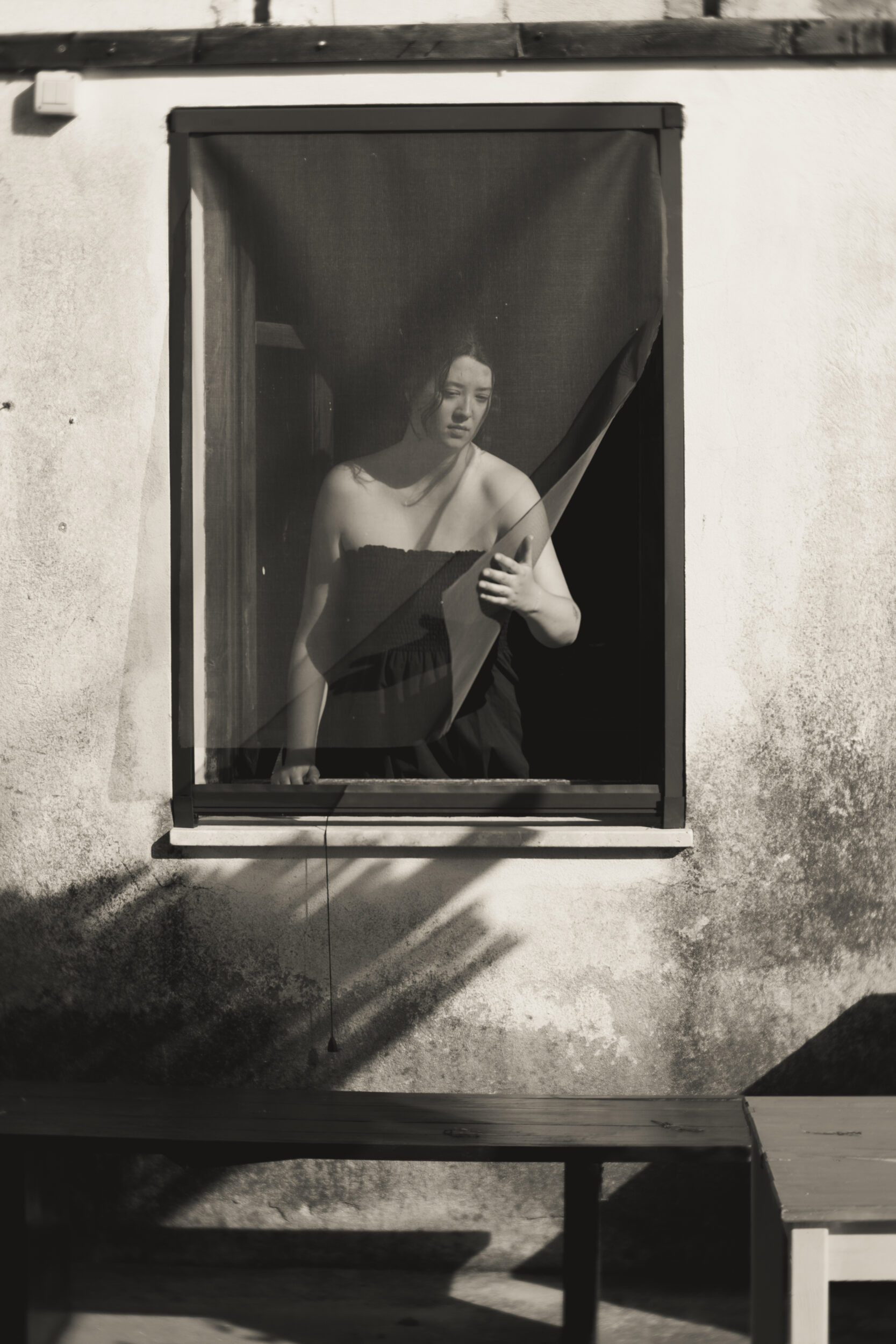
In the Midday Silver – In the space of just a few short weeks in the Spring of 2024, I lost both my father and my brother, one was expected, the other not. In my grief, I threw myself into my writing and photography, trying to process everything and find my equilibrium. I was reeling, trying to regain a foothold, to reassert myself in a world where I felt the walls were crumbling. This project served as an antidote to the anguish that I was feeling. Through the making of these images, I began to look outside of myself and reconnect with and find joy in, the beauty of the world around me. I found time to breathe through my sadness and the space to slow down and sit with my feelings, whilst not allowing them to swallow me whole. My work was my salvation. When the world off ers a glimmer of hope, it demands we pay attention, it draws us outside of ourselves, and for a moment, we are healed, finding reconnection and meaning that allows us to once again, begin.
Baud Postma | Canopy Collections (London, UK)
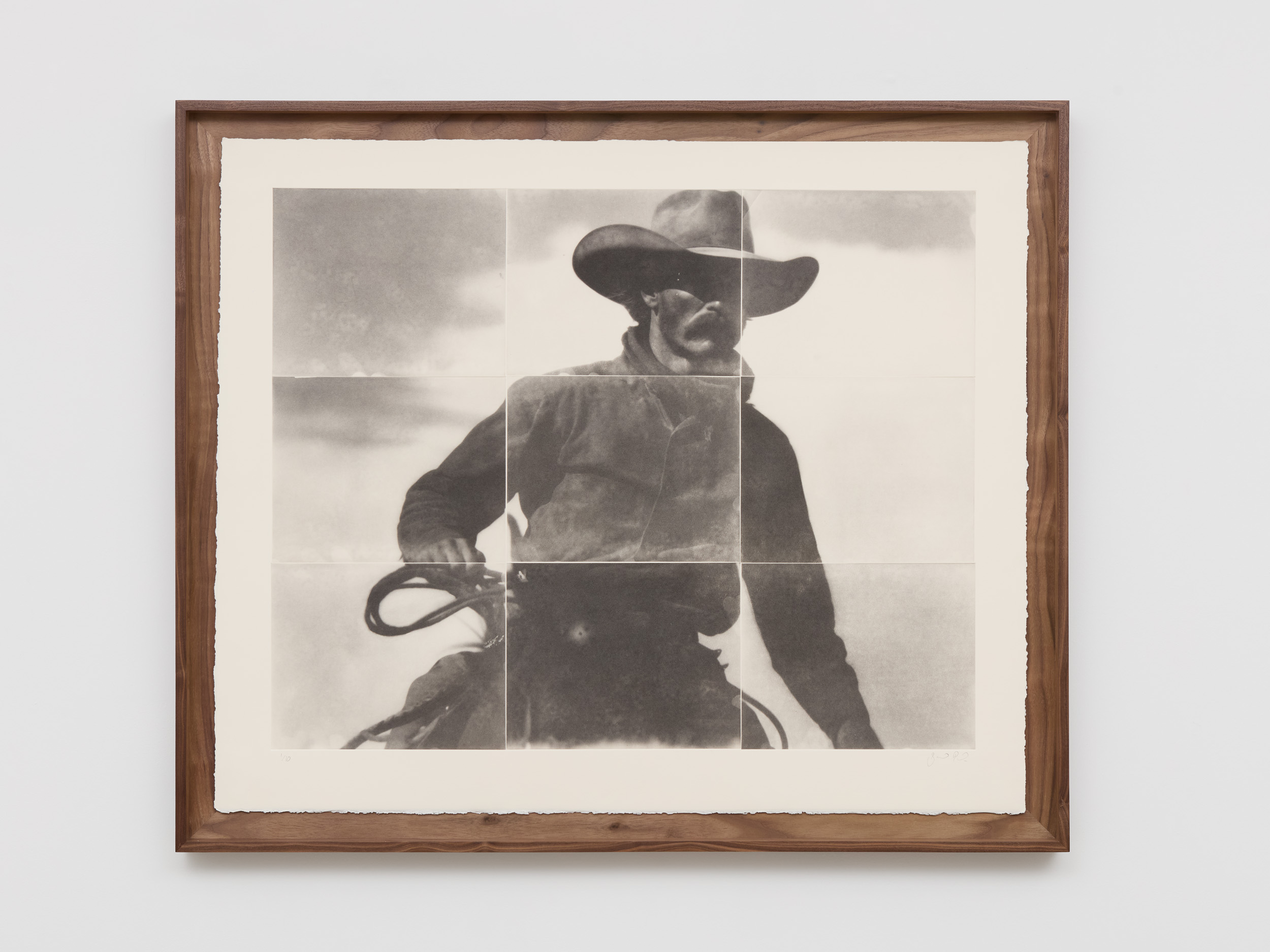
© The Artist / courtesy Canopy Collections
Artist Biography:
Baud Postma (b. 1982, London) is an emerging photographer known for his labour-intensive, technical approach to large-format photography. His series titled A Slow Dance began in the 2020 lockdown, when he started bringing flowers into his London home and photographing their gradual unfolding in shifting light. The series established the hallmarks of his large-format practice: painstaking technical process, and a singular texture and colour palette that has become immediately recognisable. In his latest body of work, titled “Death of the Author”, Postma turns to AI as a tool for conceptual enquiry. Using prompt engineering to generate images, he then subjects these digital outputs to analogue interventions. The resulting works exist in dialogue with the past, present, and future of photography, prompting viewers to consider how emerging technologies might coexist with traditional practices, and what it means today to ‘take a photograph’. Postma’s has exhibited at Photo London; Paris Photo; The Royal Academy of Arts, London; The National Portrait Gallery, London. He has also collaborated with numerous fashion brands including JW Anderson, Burberry, Dries Van Noten, Chanel, Erdem and Paul Smith. In 2025, Canopy Collections curated his first solo exhibition, titled “Baud Postma: Cowboys & Flowers”.
About the Project:
In his series “Death of the Author”, Postma uses AI as a tool for conceptual enquiry, generating images through text-to-image platforms and then subjecting them to analogue interventions. These works open a dialogue between the past, present and future of photography, inviting viewers to consider how new technologies might coexist with traditional practices. The choice of the Cowboy as subject matter provides a potent metaphor for the AI revolution: on one hand representing ideals of freedom, opportunity and self-determination; on the other, invoking histories of exploitation and extreme cultural upheaval. Blurring the boundaries between human intention and machine interpretation, he invites viewers to reconsider what it means today to “take a photograph.”
Devin Oktar Yalkin | EVİN (Istanbul, Turkey)
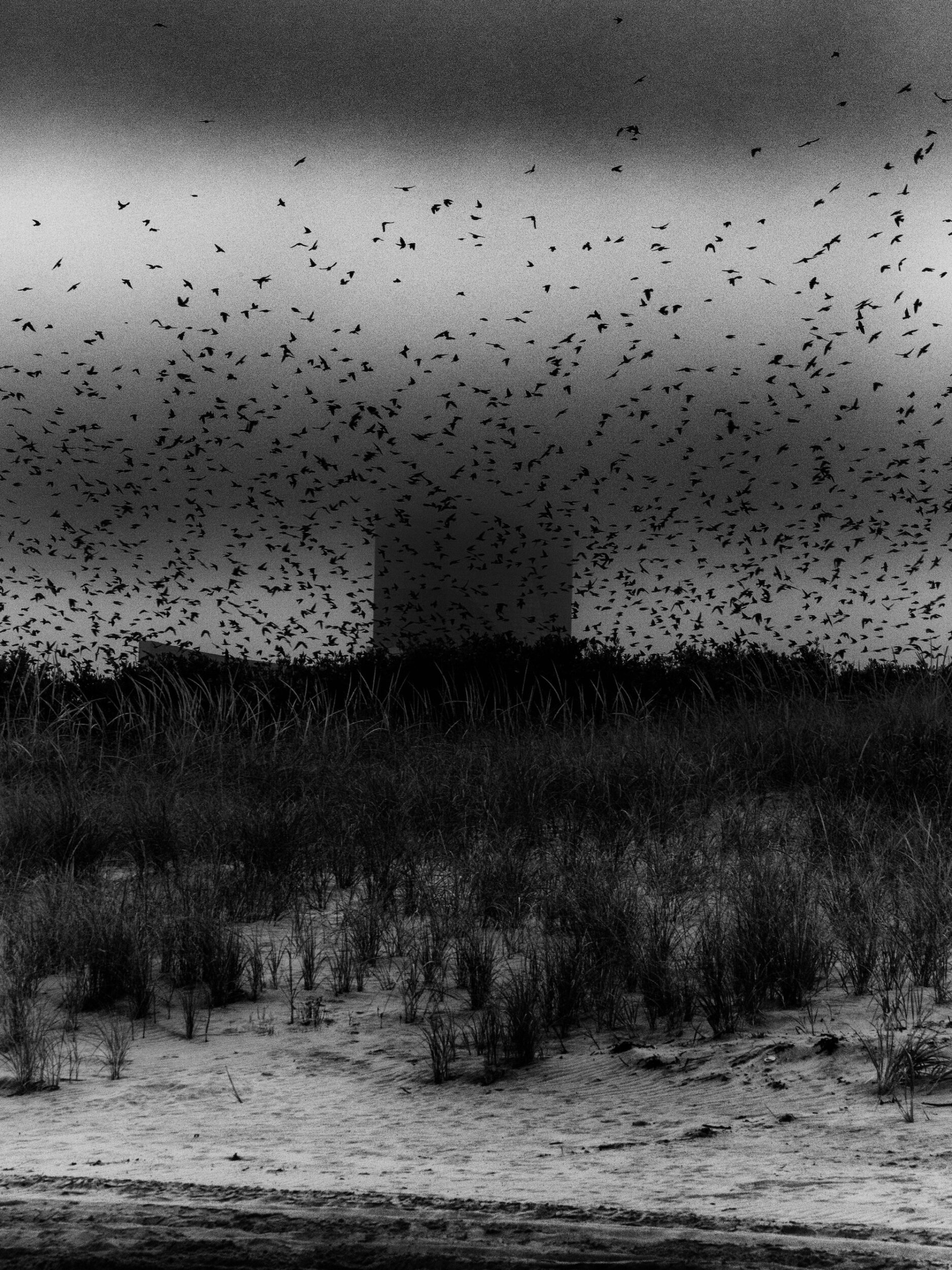
© The Artist / courtesy EVİN
Artist Biography:
Minimal black and white elements with intense contrast come together in a striking style in Devin Oktar Yalkın’s photographs where he transforms a mood, subject, or scene into a mystical image. He encourages the viewer to ask questions through his work rather than providing them with the answers they seek. Distancing himself from his routine perception of time and space, he tries to capture situations and events with raw energy. He avoids manipulating the photographs aside from basic edits. One of his outstanding series “Nemesis” consists of photographs where he tries to convey the faint remains of dreams through imagery. Consisting of editorial photos of significant people, his series “Portraits” attempts to depict the truths about the subjects in an authentic style. Born and raised in New York City, Devin Oktar Yalkin (1981) graduated from the School of Visual Arts Photography Department in 2010. Yalkin’s first monograph titled I’ll See You Tomorrow Until I Can’t, was published by Sun Editions in 2016. He has worked with many magazines such as the New York Times, Time, Vice, and Rolling Stone. Yalkin’s black-and-white photographs have been featured in various group exhibitions and fairs in the USA, Turkey, Germany, the Netherlands, France, and many other countries. After participating in the Close Range exhibition opened at Istanbul Modern in 2013, the artist’s works included in this exhibition were also included in the permanent collection of the museum. After his first solo exhibition in Turkey; Obsidian was opened at EVİN in 2022, the gallery began to represent Yalkin in Turkey. Yalkin has received the American Photography awards in 2019, 2021, 2022, 2023, and 2024. He was also selected twice for The New York Times Portfolio Review (2014, 2017) and won the Eddie Adams Workshop Grant and Residency in Jeff ersonville, NY, in 2011. In 2025, his works were presented at the Silk Road Day 1 / Between Worlds art event at Lume Studios in Soho, NYC. Yalkin’s second monograph titled Alone Together (One Last Trip Around the Garden), was published by ZONE in 2025. Yalkin lives and continues his practices in Los Angeles.
About the Project:
Alone Together is an ongoing photographic series examining how intimacy, care, and memory are inscribed within domestic space. Made during the final months of my father’s life in my family’s shore house in Brigantine, New Jersey, the work positions the home as both witness and participant in the act of loss. Following his passing, the space shifts psychologically, becoming a site where absence is felt as presence, where rooms hold tension, echo, and recall. Working in black and white, I trace surfaces marked by time, including salt air, worn bannisters, and the imprint of bodies, constructing a quiet architecture of feeling shaped by touch, duration, and the fragile continuity of family.
Akshay Mahajan | Gallery Art & Soul + Strangers House (Mumbai, India)
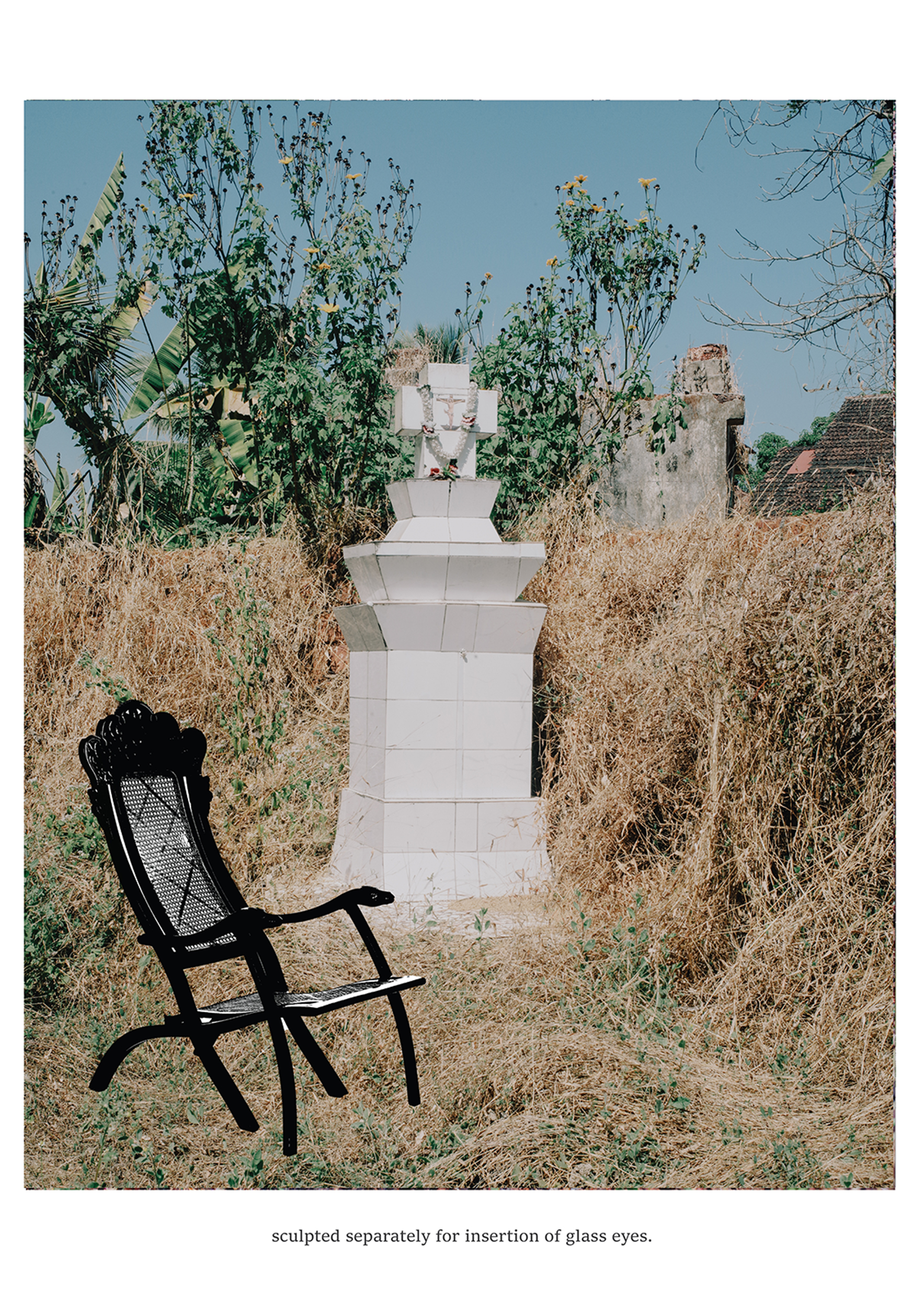
© The Artist / courtesy Gallery Art & Soul + Strangers House
Artist Biography:
Akshay Mahajan (b. 1985, India) is an artist deeply invested in utilizing photography as a mirror to culture and collective memory. His practice thoughtfully examines post-colonial cities, landscapes, folklore, and mythologies, meticulously scrutinized to reveal myriad “failed futures.” His work observes how our postcolonial reality is often anchored in a pre-colonial memory, using the camera as a tool to lay bare these connections. With a discerning eye, Mahajan explores how the physical structures and spaces in the non-western world can become emblematic of unfulfilled aspirations and unrealized potentials due to unresolved historiography. Simultaneously, Mahajan contemplates the intricate ways in which individual lives intersect with, and are shaped by, these landscapes.. In 2023, Akshay was the runner-up of the Aperture Portfolio Prize and was named Foam Talent for 2023-24. He is the winner of the Nera Di Verzasca Prize 2024. Born in India, Akshay’s work has been showcased at venues like the 13th Bamako Encounters, Cairo Biennale, Athens Photo Festival and Encontros da Imagem. Beyond photography, he engages with the visual arts through writing, teaching, and curation.
About the Project:
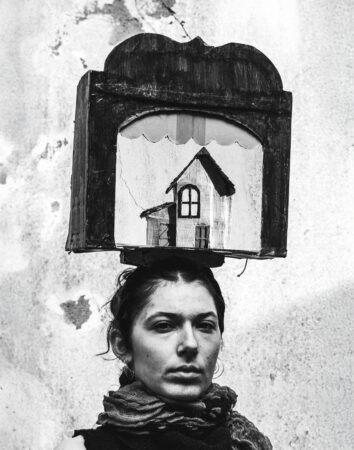
Broken Provenance is an ongoing body of work that examines how dis- placed devotional objects from the Portuguese empire reveal the politics of race, faith and movement across the sea. My starting point is Goa on India’s west coast, which was a Portuguese colony from the sixteenth century until 1961 and a key node in the Indian Ocean trade between Europe, Africa and Asia. In this period, Goan and South Asian artisans produced Catholic imagery, furniture and liturgical objects under Portuguese patronage: ivory Christs and Madonnas carved from African tusks, silver filigree caskets and Goa stone holders, mother-of-pearl crucifixes, inlaid tables and chests. Many travelled onwards to Lisbon, monasteries across Europe and missions in the Americas. Today, a large number of these objects resurface in European and American auction houses as “Indo-Portuguese” – framed by clinical cata- logue entries and estimates in euros and pounds. The project began with a simple question: what does it mean when a “Black Christ” from “South India, Goa or Sri Lanka” is reduced to dimensions, con- dition and “important private collection”, while the Goan carver, their caste, and the colonial conditions of production remain unnamed? Reading across multiple catalogues, I treat this language as both evidence and symptom. Phrases like “probably Goa”, “subject to CITES regulations”, “losses, small de- fects” become appropriated word-poems and scores for installation.
Ci Demi | Sule Gazioglu Gallery (Istanbul, Türkiye)
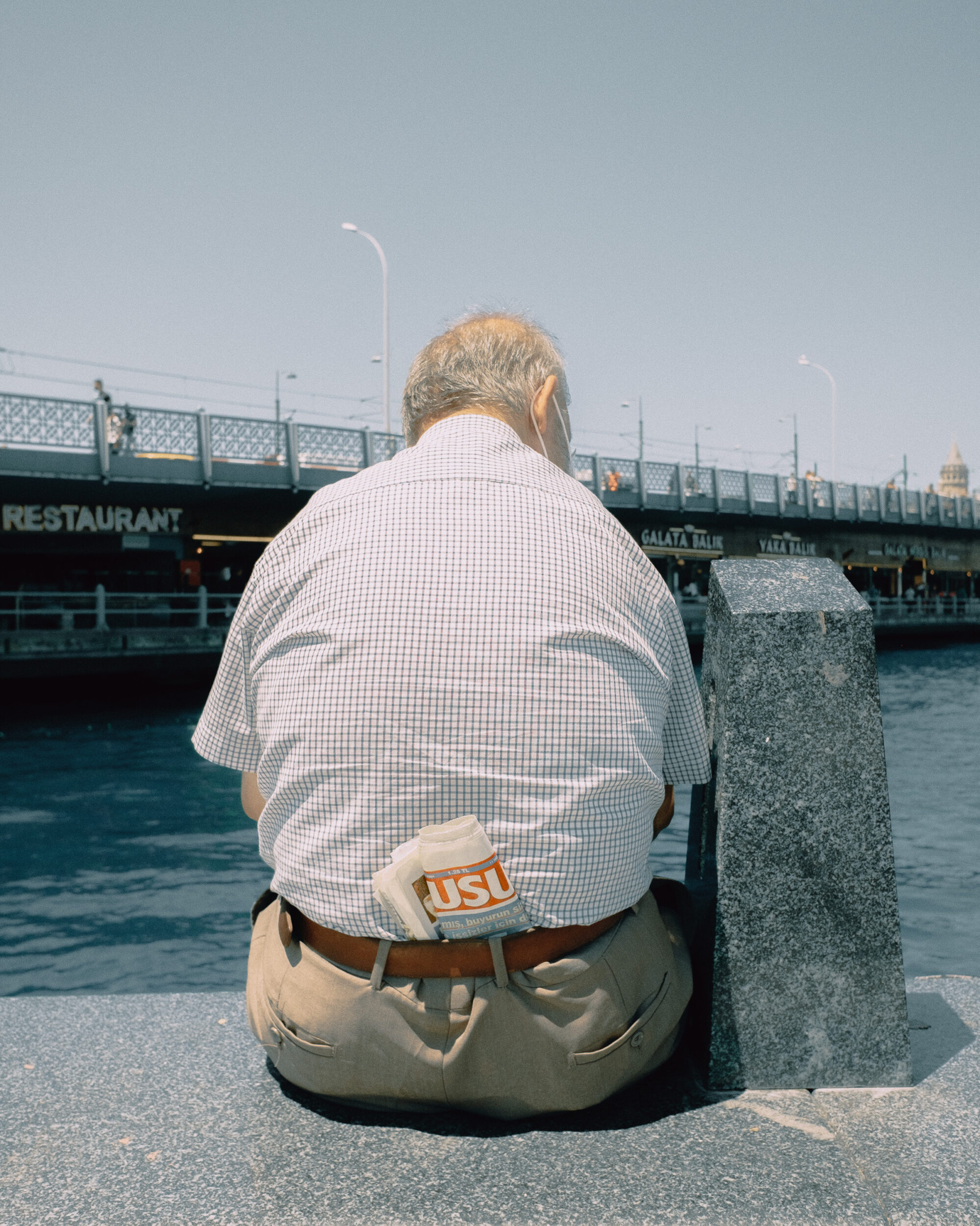
© The Artist / courtesy Sule Gazioglu Gallery
Artist Biography:
ACi Demi (he/him — b. 1986, Istanbul, Türkiye) is an Istanbulite photographer. He studied Italian Literature at Istanbul University. At 28, he discovered photography. His photographs have been featured in prominent publications like Foam Magazine and the British Journal of Photography. Demi’s work has been showcased at renowned festivals and venues, including Les Rencontres d’Arles, Istanbul’s Pera Museum, and Milano’s Mudec. In 2022, his series “Unutursan Darılmam” (No Off ence If You Forget, 2018—2024) was selected as the winner of Discovery Awards at Encontros da Imagem photography festival. Onagöre published Demi’s debut photobook, “Şehir Fikri” (Notion of a City, December 2022), an eerie portrayal of Istanbul marked by the absence of people, animals, and language. Inspired by Georges Perec’s oulipo novel “La Disparition” (A Void, 1969), the book focuses on the city’s haunting essence. His personal work explores the psychogeography of Istanbul, intricately weaving together intimate narratives of the city’s landscape with his own lived experiences. While he adopts a documentarian approach to his images (ensuring they are always unstaged), his use of colour to convey a “quiet tension” is prominent in his work. Based in Istanbul, he is a documentary photographer whose work is frequently featured in publications such as The New York Times, the Financial Times, and Der Spiegel.
About the Project:
This series is, first and foremost, a story of colour. By using flash in broad daylight, these framed and frozen scenes mourn a peaceful nostalgia while simultaneously paying tribute to the unstoppable flow of time. Whether viewed individually or as a whole, each photograph is an attempt to halt the gears of a metropolis of sixteen million people. By stripping back a bridge crossed by countless people every day, or capturing the relatable solitude of a man sitting by the sea, these frames convey a certain peculiarity. In this particular shot, while walking home after a fruitless day of photography, I noticed a newspaper, the trousers it was tucked into, and finally the figure. Using a 28 mm lens required the close proximity I usually favour. The resulting shot captured a slice of stillness amidst the urgency of Istanbul.
CURATORIAL COMMITTEE
The photographers above have been shortlisted by the Photo London 2026 Curatorial Committee. Photo London is a place to encounter the most innovative emerging artists, new work by established masters and rare vintage pieces, and as such is guided by a Curatorial Committee comprised of some of the field’s most esteemed curators, critics and museum directors.
Philippe Garner (Chair) – Former Director at Christie’s and International Head of Photographs and 20th Century Decorative Arts and Design
Renee Mussai – Independent curator, scholar, and writer – former Senior Curator / Head of Collection at Autograph, and Artistic Director of The Walther Collection
Simone Klein – Photography Advisor and Appraiser
Sofia Vollmer de Maduro – Director of Programs, Society of the Four Arts, Palm Beach, collector and Curator Emeritus of the Alberto Vollmer Foundation collection
Martin Barnes – Senior Curator, Photographs at the Victoria and Albert Museum, London
Tristan Lund – Art Consultant, Dealer and Collection Curator of The Incite Project, a UK based collection of photojournalism and documentary photography. Tristan also represents a select group of emerging photographic artists.
Brandei Estes – Former Head of Photographs (Europe, Middle East and Africa), Sotheby’s.